
One Shoot, Twelve Markets: What a Global Campaign Actually Needs From Production
A global campaign needs more than one master film: plan versioning, rights and local relevance at brief stage, before production begins
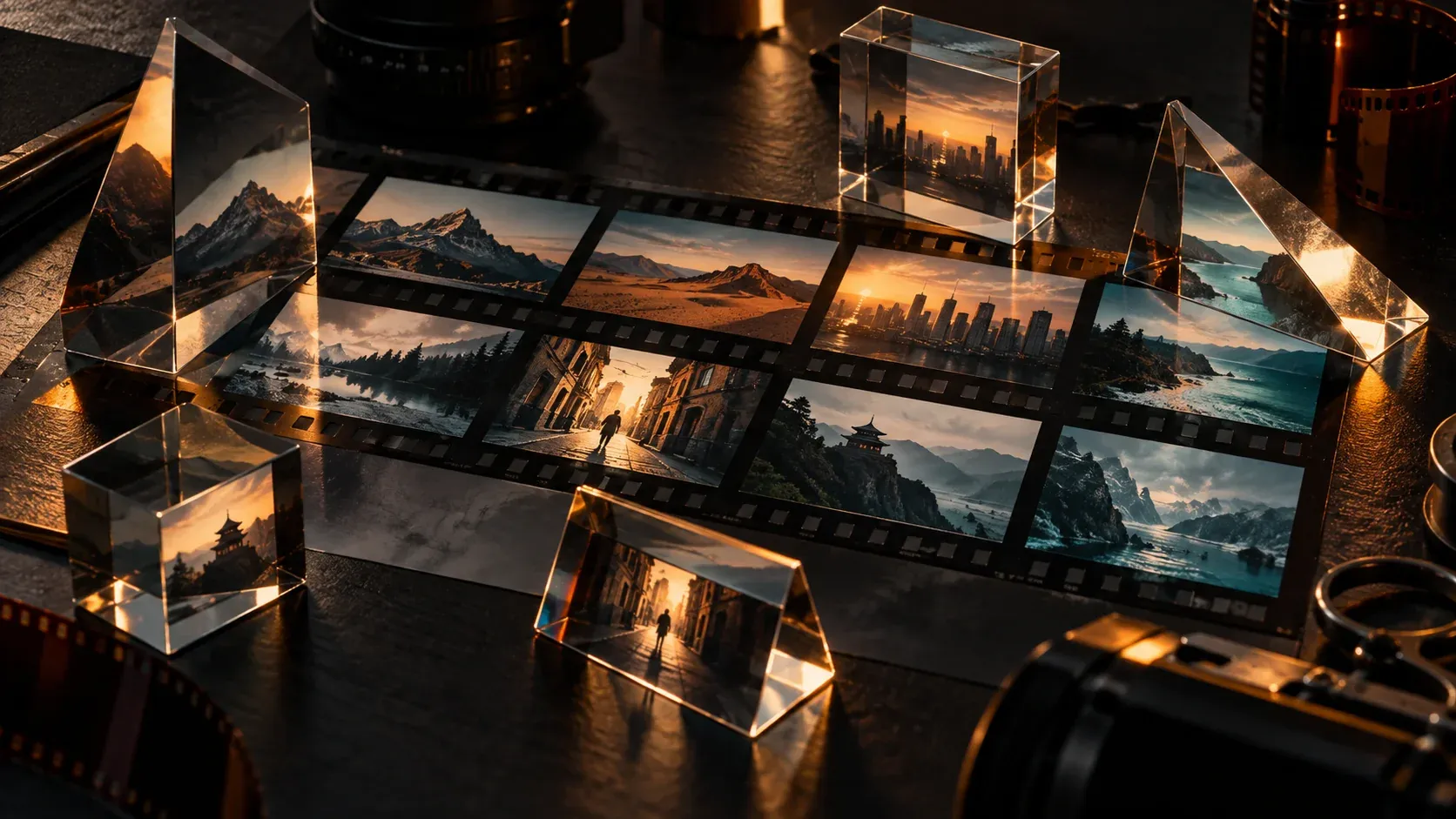
A commissioning conversation often starts with a singular idea: one film. But when that campaign has to work across markets, the thing you are actually buying is not a master. It is a set of assets, versions and rights that need to function together wherever the work runs.
The distinction matters because the most expensive production decisions are often made before anyone books a camera. A film conceived for one audience, one channel and one set of usage terms may be difficult to reshape later. If the campaign needs different durations, formats, languages, territories or local interpretations, those requirements belong in the production thinking from the start.
Twelve markets is useful as a way to frame the challenge, not as a claim about a particular campaign. The question is the same whether the work needs to travel to two markets or many more: what does the production need to create so that the campaign remains coherent, relevant and usable?
The master is only the starting point
A master film can be the most visible part of a campaign, but it is rarely the whole deliverable. The working set may include the main TV commercial, social assets, shorter edits, alternative aspect ratios, cutdowns, stills, clean versions and market-specific end cards. Each one needs to feel like part of the same idea while serving a different viewing context.
That means the production brief cannot stop at the question of what the hero film should say. It also needs to consider where the story may need to breathe, which moments can stand alone, whether a scene can work without dialogue, and how the brand message can be carried when the edit becomes shorter or the format changes. These are creative and production decisions, not administrative details to be resolved after the shoot.
Our work on Sainsbury’s Bank’s ‘Protect What You Love for Less’ makes the point clearly. NaF+BrandFilms was tasked with producing the main TV commercial and related social media assets for The River Group. The social work came as part of the commission, a critical element of the campaign, rather than an afterthought added once the TVC was complete.
That distinction changes how a production is planned. If social assets are treated as a separate request at the end, the team may be trying to find usable moments in material that was designed for a different purpose. If they are considered alongside the TVC, the shoot can be structured around a wider asset set from the beginning. The campaign then has more room to work across channels without asking one edit to do every job.
Versioning is therefore a production decision, not a post-production decision. Video localisation can adapt language, graphics and delivery versions; video editing can reshape the footage that has been created. It cannot reliably invent the right structure after the fact. The brief should establish the asset family before the shoot, so that the production captures what each version needs rather than hoping the master will contain it by accident.
Rights are part of the production brief
A global campaign also carries a set of permissions. Usage, territory and term are budget lines, and they need to be settled while the work is being defined. Leaving them vague may appear to keep the brief flexible, but it can create a second round of negotiations when the campaign is ready to travel.
The practical questions are straightforward. Where will the work be used? Which channels are included? How long does the permission need to last? Does the same version run everywhere, or will local markets adapt the work? Are the required rights aligned with the people, music, voice, language and other creative elements being considered?
These questions do not reduce the creative ambition. They give the production a clear boundary within which to make good choices. A casting decision, a piece of music or a contributor’s appearance may work for the initial brief but become difficult to extend if the intended territory or term changes. When usage is understood early, the production can account for that reality rather than revisiting the work after it has been made.
The same principle applies to the way a film is organised across a distributed team. ‘The Sound of Japan’ was made for end client JNTO, with creative agency SPANDY and production by NaF+BrandFilms. It was directed by G&L, who also served as DOP and editors, with Sofia Panayiotaki as Executive Producer, James Chamberlain and Karin Sugiura as producers, Jithu Appu as colourist, and sound mixing and mastering by Karin Sugiura.
That credit structure illustrates how a single film can be run across territories by a crew distributed across them. Clear roles and a shared understanding of the final asset allow the work to stay connected even when responsibility is not held in one place. The production question runs wider than who is on set: how do decisions, approvals and finishing requirements stay aligned from the first brief through to each territory’s delivery?
This is where a production partner needs to be involved before the scope is fixed. Our video production approach starts with understanding what the campaign must do, not only what the master should look like. Rights, territories and terms are part of that definition because they affect what can be commissioned and how confidently it can be used.
Local relevance can travel
Global reach and local relevance are often treated as competing priorities. One is assumed to require consistency; the other is assumed to require adaptation. In practice, the strongest work can be locally led and travel because it has a clear point of view, rather than travelling despite having been made for nowhere in particular.
Häagen-Dazs’ ‘Don’t Hold Back’ is the exact global and local tension in the client’s framing. The work was built on the brand’s global ‘Don’t Hold Back’ campaign, which highlighted extraordinary women in the Middle East and embodied the spirit of co-founder Rose Mattus. Häagen-Dazs wanted to rename iconic ice cream products in the UAE to honour influential women. The brand entrusted PRM+NaF+THEM AGAIN with a dedicated UAE-led activation designed for global impact. Production was by NaF+BrandFilms.
Local focus is how the idea becomes specific. Treating it as a compromise to the global idea gets the relationship backwards. The UAE-led activation gives the campaign a reason to exist in that market, while its connection to the wider ‘Don’t Hold Back’ platform gives it a route to travel beyond it. That is different from taking a generic film and adding local details at the end.
For a commissioning team, the implication is important. Local relevance should be considered at the same time as the global platform, not as a final layer of approvals. The brief should identify what must remain consistent and what can be shaped by local insight. It should also make clear who is best placed to lead those decisions, so that local contribution is part of the creative process rather than a late-stage correction.
This does not mean creating twelve unrelated films. It means understanding which elements give the campaign its shared identity and which elements allow it to speak credibly in a particular place. Sometimes that will be a local story, a local voice or a market-specific activation. Sometimes it will be the way a central idea is framed. The production needs to preserve the relationship between the two.
Settle the shape before the shoot
At brief stage, begin by defining the complete deliverable set rather than naming only the master. Include the channels, formats, durations and versions that the campaign is expected to need. If some requirements are not yet confirmed, identify them as decisions to be made, not assumptions that production can solve later.
Then settle usage, territory and term alongside the creative scope. The production team should know where the work is intended to run and for how long, so that the rights attached to the campaign are planned with the work itself. This is also the point to establish how approvals will work across the central team, agency and local markets.
Finally, decide what local relevance means for the campaign. Specify the non-negotiable elements of the global platform, then make room for the market-led choices that give each activation its reason and credibility. The goal is work that stays recognisably connected while remaining genuinely useful in each place. Identical everywhere is a different and lesser target.
That is the difference between commissioning a film and commissioning a global production. The master remains important, but it is one part of a wider system of assets, rights and decisions. When that system is defined early, the production can protect the idea while giving the campaign the flexibility to travel.
Talk to NaF+ about your next global campaign
Use our free video brief template to put your audience, markets, deliverables, budget and approval responsibilities into a shared starting document.
If your campaign needs to work across markets, talk to NaF+ before the production scope is fixed. We can help you define the asset set, rights questions and local strategy that the shoot needs to support.